The SwissChips initiative strengthens semiconductor and microelectronics research in Switzerland
With the global economy becoming increasingly digitalised, semiconductors have become a strategic sector. In Switzerland, research and innovation in this field is being supported by the SwissChips initiative, which will run from 2024 to 2027.
04.12.2025
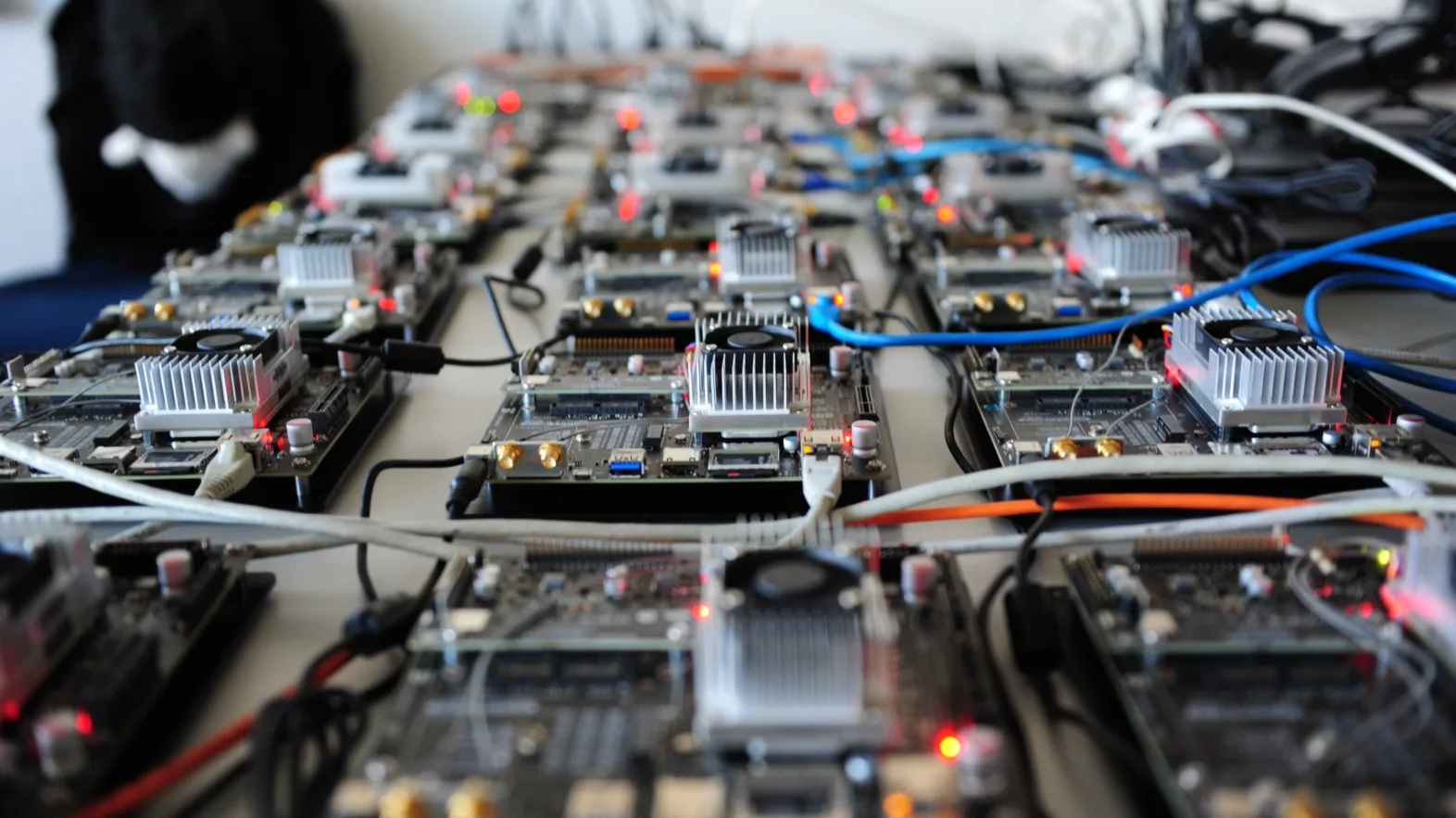
Semiconductors are found in a wide variety of electronic devices such as smartphones, computers and solar cells, making them an integral part of our daily lives. Leading economies are looking to become more independent from other countries in the semiconductor sector. At the same time, greater emphasis is being placed on digital sovereignty, leading to the formation of strategic partnerships between individual countries. These developments not only have a global impact on companies, but also affect international cooperation in research and innovation.
Global expenditure on research and semiconductor production
The US and EU have already made or announced major commitments through their respective Chips Acts. The primary aim is to create better conditions for local chip production and to support research and innovation.
In the area of research and innovation, most EU activities since 2023 have been carried out through the Chips JU European partnership, which falls within the scope of the EU Chips Act. Chips JU brings together the European Commission, participating member states, and industry associations. With a budget of EUR 4.2 billion for the period 2021–2027, the partnership is funded through Horizon Europe and the Digital Europe Programme. Swiss organisations are eligible to bid for relevant calls for proposals, provided funding is sourced through Horizon Europe. Most of Chips JU projects funded by the Digital Europe Programme focus on expanding technological capacities and infrastructure and remain reserved to EU member states.
What is a semiconductor?
Semiconductors are materials whose electrical conductivity can be specifically controlled. Semiconductors are broadly divided into two groups: integrated circuits and OSD components (optoelectronics, sensors, discrete semiconductors), which are mainly used in lighting applications such as LEDs, optical communication, solar panels and cameras. Integrated circuits, also known as chips, are made of semiconductors (usually silicon) and perform complex electronic functions such as calculation, storage or control. Chips form the basis of virtually all modern electronics such as those used in smartphones, computers and cars.
Semiconductor research in Switzerland
Switzerland's own semiconductor and microelectronics industry serves niche markets and has an active research community. In the context of non-association with Horizon Europe (2021–2024), Swiss stakeholders were unable to bid for certain calls for proposals in strategic areas. The Federal Council therefore decided to take transitional measures. The SwissChips initiative was launched to ensure that Switzerland does not fall behind the EU in semiconductor research. At the same time, the aim is to reinforce Switzerland's position in the critical area of chip design.
The SwissChips initiative is led by the Swiss Federal Institute of Technology Zurich (ETH Zurich), the Swiss Federal Institute of Technology Lausanne (EPFL), and the Swiss Center for Electronics and Microtechnology in Neuchâtel (CSEM). Ongoing research activities include the design of integrated circuits and significant infrastructure is already in place.
The research activities and outcomes of the initiative will be accessible to all Swiss universities and universities of applied sciences. The Swiss government has allocated CHF 26 million to the SwissChips initiative. The consortium partners involved in the initiative will contribute an additional CHF 7.8 million. The three institutions – ETH Zurich, EPFL and CSEM – are working closely together and industry stakeholders have been integrated into the governance structure.
Objectives of the SwissChips Initiative
During the three-year period from 2024 to 2027, two main objectives will be pursued:
- Ensuring that Swiss researchers and research infrastructures maintain a leading position;
- Building a strong pool of talent and expertise in the strategically important field of chip design.
Research and development activities will be carried out in eight work packages covering different topics. Emphasis will be placed on the most important current and future EU research programmes, projects and initiatives. The priorities will include future technologies in 6G communication, AI-specific chips and the use of chips in biomedicine.
Initial findings show great promise
Researchers and innovators presented their initial findings at the first SwissChips Annual Event in June 2025. The preliminary figures for the SwissChips initiative are impressive: over 90 PhD students, postdoctoral fellows and researchers have been involved in the eight work packages. This has resulted in the publication of 58 research papers as well as the design and manufacture of 25 state-of-the-art chip prototypes. Initial workshops to encourage young people to take up chip design have also been conducted.
For the remaining duration, the SwissChips initiative will focus on continued talent promotion and the provision of infrastructure for chip design. The next annual event will take place on 4 June 2026 at the SwissTech Convention Center at EPFL.
Transitional measures for non-accessible parts of the programme
To mitigate the impact of Switzerland’s non-association to the Horizon package between 2021 and 2024, the Federal Council introduced a series of transitional measures for this period. These measures distinguished between accessible (i.e. eligible for direct funding) and non-accessible components of the programme. SERI is funding the SwissChips initiative as part of the latter, drawing funds that the Swiss parliament had approved at the end of 2020 for Switzerland's participation in the Horizon package 2021–2027.
Contact
Giuditta Rusconi, SERI
International Research and Innovation Programmes
giuditta.rusconi@sbfi.admin.ch
+41 58 463 27 95
Author

Giuditta Rusconi
Related links
Read more

Mia Mader
Francesca Stocker, …