The Silicon Valley where Embodied Intelligence takes shape
Across Silicon Valley, not one week goes without a new announcement and advances in robotics from start-ups to robotics companies. The convergence of artificial intelligence with advanced hardware has ushered in what many are calling a new robotics renaissance. And in October 2025, Swissnex in San Francisco stepped right into it.
01.12.2025

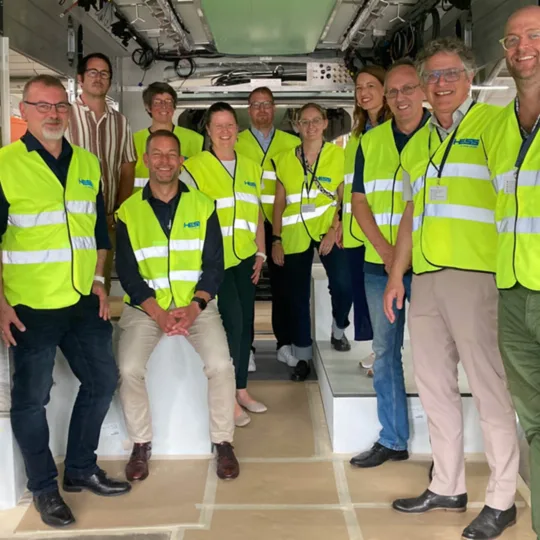
In October 2025, the program Embodied Intelligence: Brains, Bots & Borderless Innovation brought nine Swiss researchers and founders to the San Francisco Bay Area for a week of exchange with local universities, start-ups, companies and investors. Their fields ranged from humanoid autonomy and legged manipulation to aerial robotics and construction automation, but the ambition was shared: to understand how intelligent machines will evolve, find their way helping people and businesses in the years to come.
A Robotics Renaissance
The Bay Area today is a living laboratory for what NVIDIA’s CEO Jensen Huang has dubbed Physical AI, the moment when learning systems become physical or robots boosted with new performant AI systems. At the same time, Switzerland has quietly become one of the world’s most concentrated robotics hubs, home to ETH Zurich and Lausanne, the Dalle Molle Institute for Artificial Intelligence (IDSIA), the Zurich University of Applied Sciences (ZHAW), and to start-ups such as ANYbotics, RIVR, and Flyability SA and many others.

The Embodied Intelligence program connected these two poles of innovation. For a week, the Swiss cohort engaged with researchers at Stanford University, visited companies pushing the limits of autonomy, and joined investors and entrepreneurs in discussions from the challenges and opportunity in the current market to the societal impact of robotics. The format was part learning expedition, part reflection on what “intelligence” means once robots from factories to the streets gain such capacities.
Exchange in Motion
Throughout the week, conversations circled around a few recurring themes: how to merge AI’s generative capacities with physical control; how to test robots safely in human environments; and how to move from impressive prototypes to reliable products. The cohort’s visits, to Stanford’s Robotics Center and Movement labs, to labs exploring motion and perception, and to Bay Area companies like OpenAI, Physical Intelligence and Skydio, were about perspective and knowledge building.
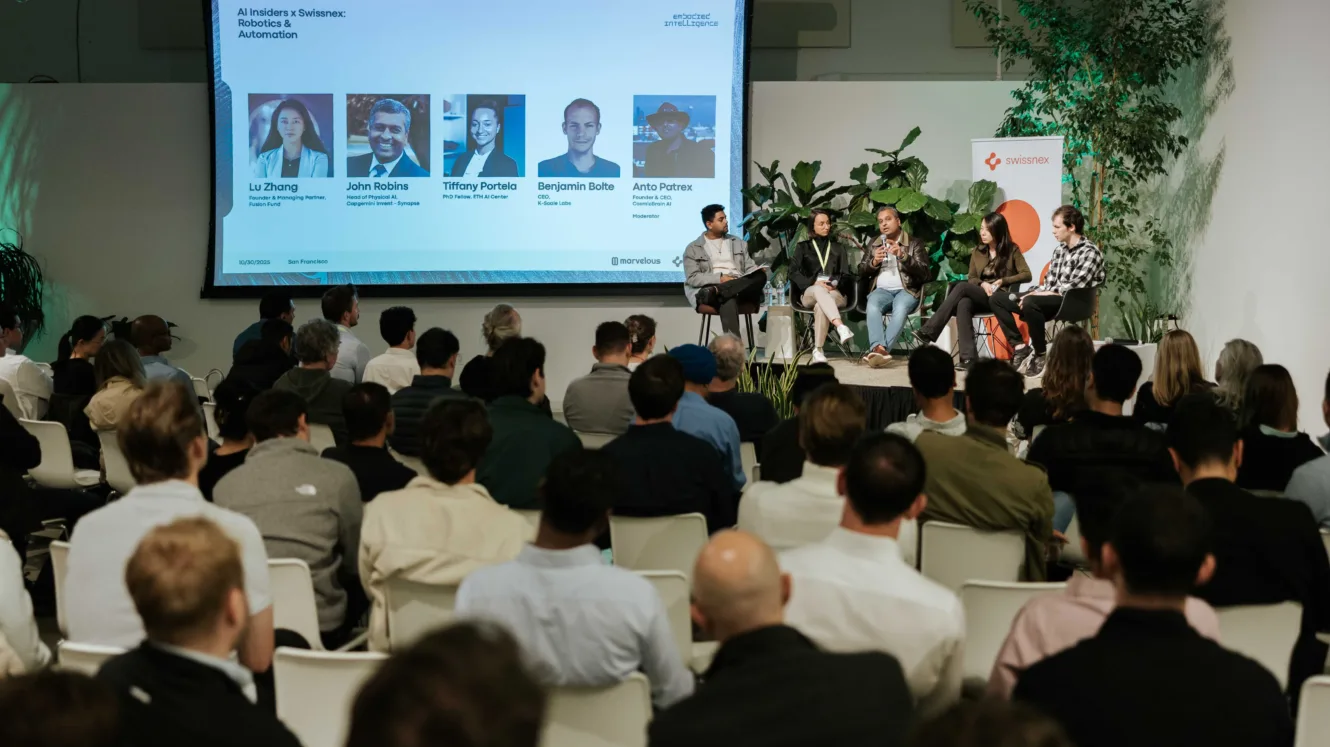
The exchange also ran both ways. At Swissnex, an event co-organized with AI Insiders brought Swiss and U.S. voices together on one stage: investors, founders, and researchers debating what is hype, what is real, and what investment in robotics should look like over the next decade. What we observed is that the excitement and funding are clearly here, but translating innovation into impact still takes time, patience, and collaboration.
The Human Question
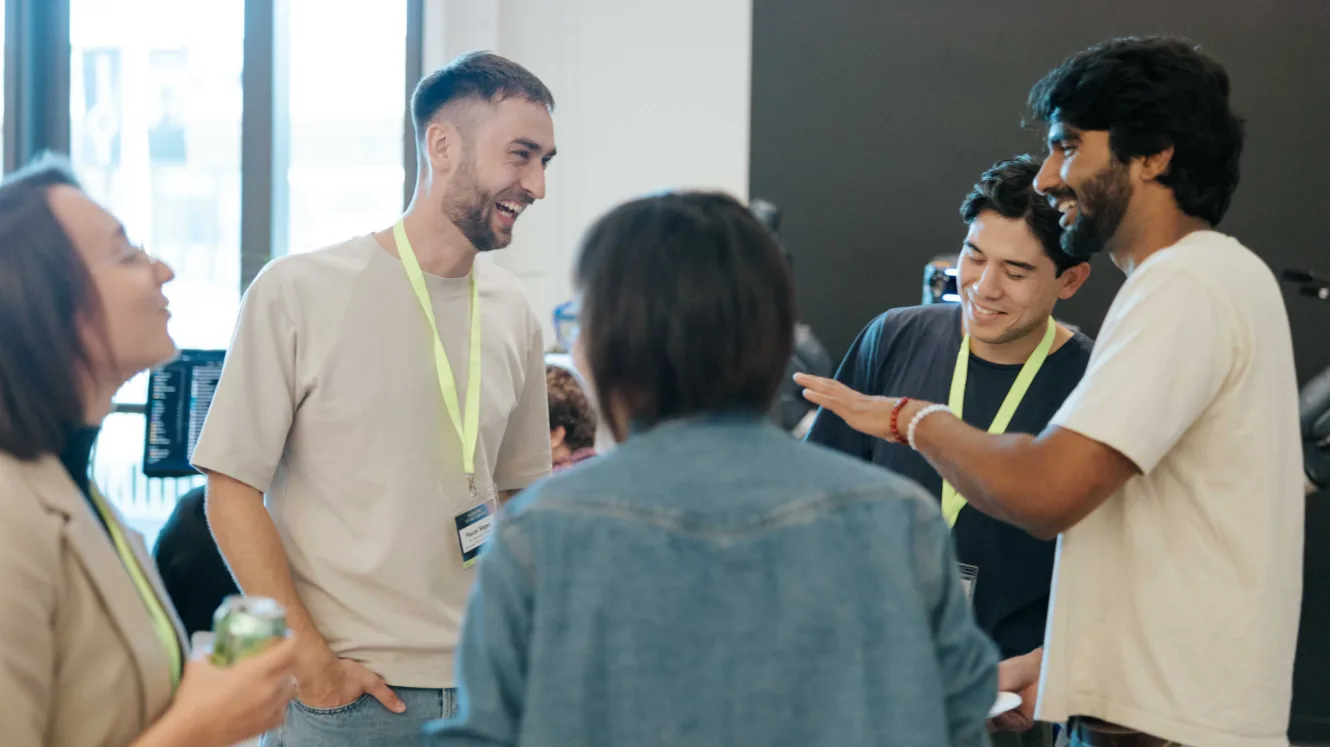
If there was a thread uniting the discussions, it was the human dimension. Robotics is no longer just about mechanical capability; it’s about coexistence whether in factories and warehouses but increasingly in everyday life from robot vacuum to self driving cars. How do we design robots that understand social cues, share physical spaces, and contribute to human well-being?
“Embodied intelligence isn’t only a technical challenge, it’s an ethical and cultural one.”
That reflection was deepened during a futures-thinking workshop led by the Institute for the Future, where participants mapped emerging “signals” for the coming decade of robotics, ranging from regulation and labor shifts to new notions of trust and purpose. The session underscored that foresight thinking is as critical as skills that help engineers step beyond immediate problem-solving.
Not only a Showcase, a Bridge
For Swissnex in San Francisco, Embodied Intelligence is part of a broader effort to build bridges between Switzerland and North America’s innovation ecosystems. The week functioned as both experiment and catalyst: a chance for Swiss researchers to show their work and research while also immersing themselves and learning from the fast-moving Bay Area scene, and for local partners to encounter the depth and rigor of the Swiss robotic scene.
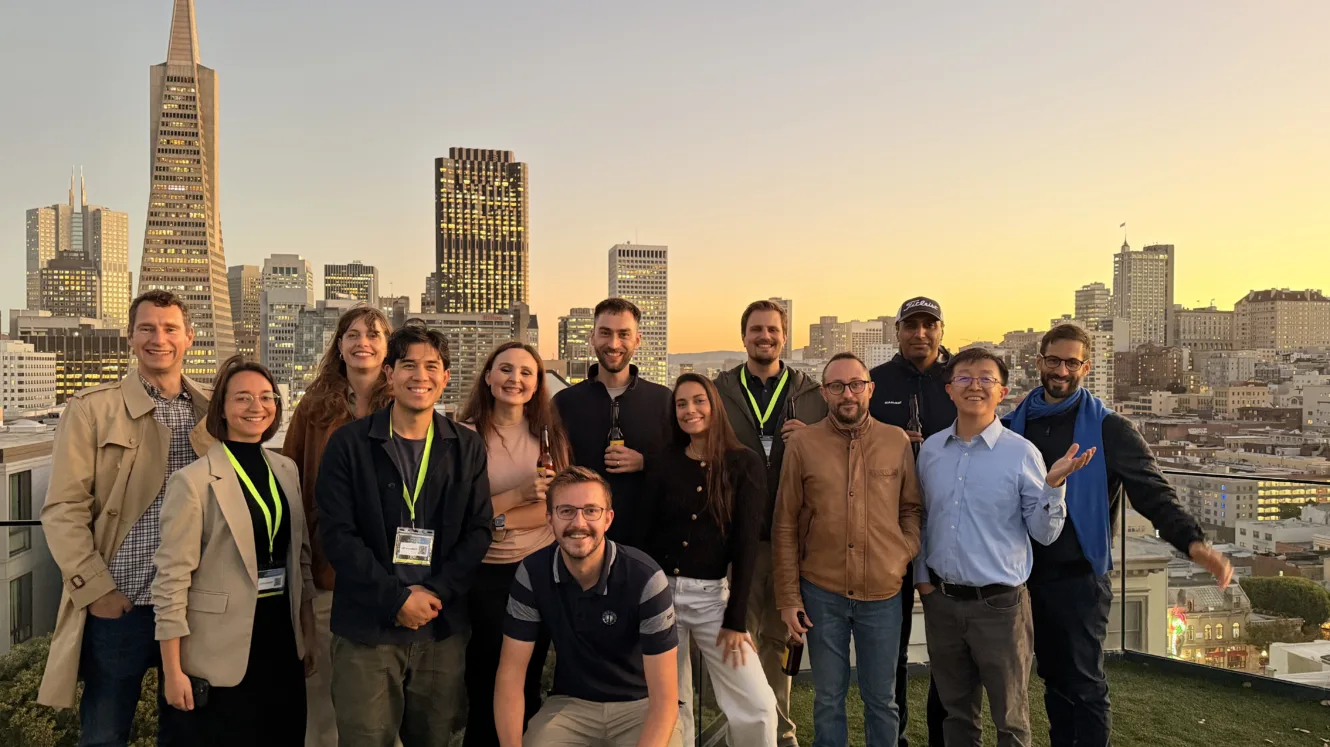
What emerged was new knowledge and new networks, a set of collaborations likely to extend far beyond this single week. “What makes this place special,” said one participant, “is not the technology itself, but the concentration of talents.”
As robots learn to move and interact with the world with greater autonomy, the real test will be how societies choose to integrate them. Programs like Embodied Intelligence offer a place to discuss and choose the place and purpose technology will have in our lives.
Contact
Author

Maulde Cuérel (Swissnex in San Francisco)
Related links
Read more
Mia Mader
Francesca Stocker, …