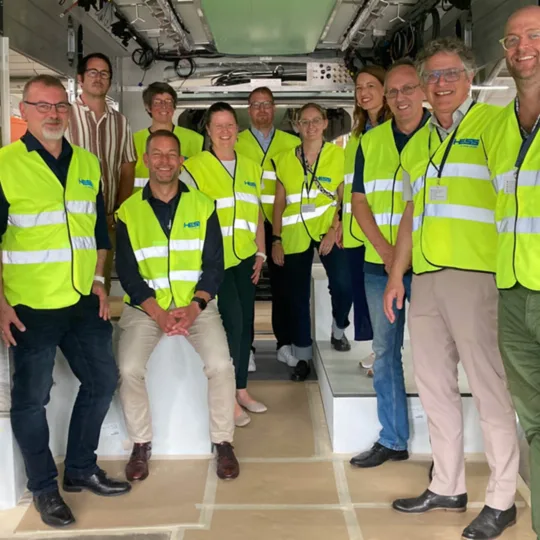
How Switzerland is preparing for the future of particle physics
The European Strategy for Particle Physics is intended to shape the future of particle physics. Under this strategy, the favoured option for the next major project at CERN is the Future Circular Collider. Switzerland seeks to consolidate its expertise in particle physics through targeted support instruments for technology, research and early-career researchers.
10.02.2026
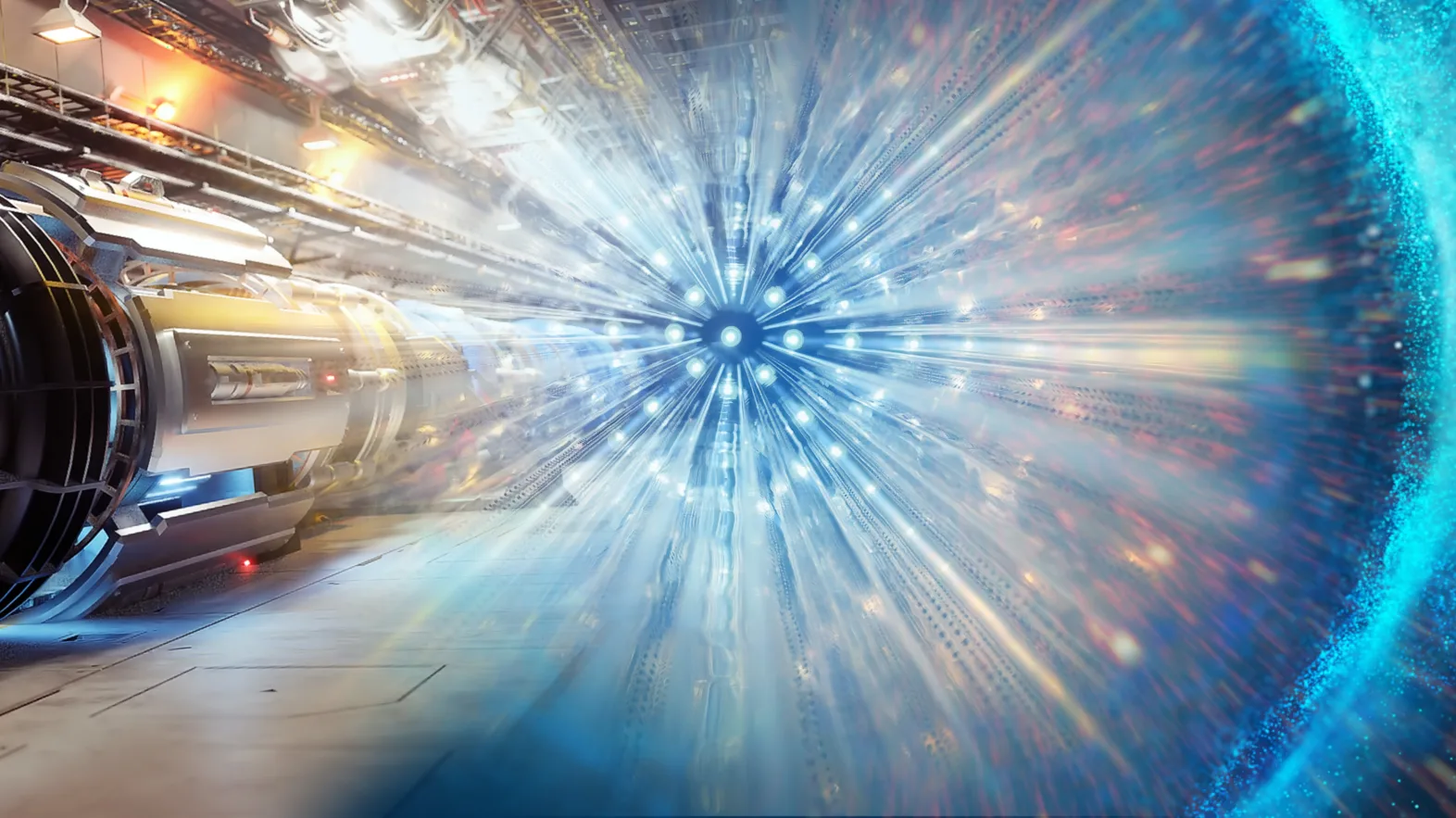
Europe has reached a crucial turning point in particle physics: with the updated European Strategy for Particle Physics 2026, the research community is setting its priorities for the coming decades. The main focus is on the Future Circular Collider (FCC) particle accelerator, currently the subject of a CERN feasibility study. The authors of the European strategy paper had considered several other accelerator projects. The FCC is considered the most convincing project in terms of answering a number of unresolved questions, e.g. why is there much more matter than antimatter in the universe. Like its predecessor, the Large Hadron Collider (LHC), the plan is to build a circular accelerator in a new, approximately 91-kilometre-long tunnel under Swiss and French soil. This facility could become a new flagship project for the greater Geneva region.
Special role of the host countries
The FCC is intended to provide new answers to fundamental questions by studying the collision of particle beams. The aim is to shed light on the properties and role of the Higgs boson, the nature of dark matter and previously unknown physical phenomena. The project will move forward in stages: the first stage will involve construction of an electron-positron accelerator, which is expected to be operational from the mid-2040s. Later, from around the mid-2070s, a proton-proton accelerator with unprecedented energy will follow.
The two host countries of CERN, Switzerland and France, bear special responsibility when it comes to new large-scale projects. These require careful planning and the integration of new infrastructure. At the same time, a project such as the FCC offers the opportunity for long-term targeted strengthening of a country's own research landscape. What matters is not just a future political decision, but also what is being set in motion today.
Targeted support for key technologies
The technical feasibility of the FCC has been intensively explored in recent years. The project is considered to offer considerable scientific benefits. However, more than just a tunnel and machines are needed to bring such a large-scale project to fruition. Equally important factors are expertise, very specialised technology and highly trained specialists. This is precisely where Switzerland has a role to play.
For around ten years now, Switzerland has been systematically involved in the development of key technologies for future particle accelerators. A core instrument has been the Swiss Accelerator Research and Technology (CHART) initiative. This national collaborative endeavour is hosted by the Paul Scherrer Institute (PSI) and combines the expertise of PSI, ETH Zurich, EPFL, the University of Geneva and CERN.
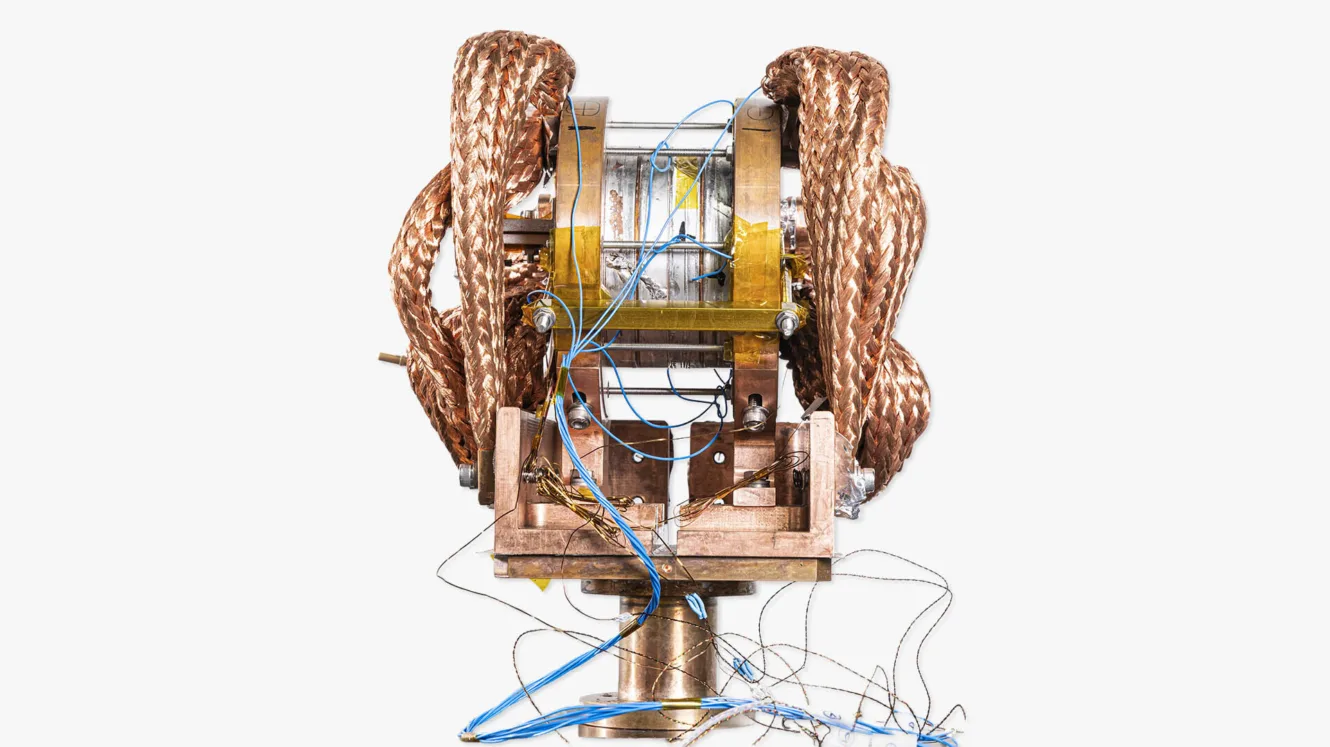
CHART develops critical technologies for the FCC. These include superconducting magnets, high-frequency systems and energy-efficient accelerator components. The initiative is considered a successful model that has greatly contributed to parts of the FCC feasibility study. It strengthens linkages between fundamental research, technological development and industrial capacity in Switzerland.
SERI supports CHART and CHEF initiatives.
In addition to contributions from its member institutions, CHART's successful work receives funding from the State Secretariat for Education, Research and Innovation (SERI) – around CHF 4.7 million for the 2025–2028 ERI funding period. In this manner, the federal government is making a targeted investment in research and development in cutting-edge technology, which also benefits Swiss industry. The funding also ensures that Swiss stakeholders can play a major role in the construction of a future accelerator.
‘As part of the CHART-project, concepts for the FCC's pre-accelerators are being developed at the Paul Scherrer Institute. Advanced technologies for linear accelerators have been developed for the SwissFEL facility at PSI, and these are very well suited for use at the FCC. On this basis, Switzerland would be in an excellent position to contribute its technological expertise in collaboration with industry.’
However, technology alone is not enough. How the future FCC will be used for scientific purposes is equally important. This is where the second Swiss initiative comes in: the Swiss High Energy Physics for the FCC (CHEF). This initiative focuses on the development of future experiments and on building capacity of early-career researchers. The CHEF initiative is still in its infancy: it was launched in 2025 by the University of Zurich with the participation of the Universities of Basel, Bern and Geneva, ETH Zurich and EPFL, and PSI. Between 2025 and 2028, the federal government will supplement the funds provided by the participating institutions for CHEF, providing a total of CHF 4.8 million.
Two initiatives with complementary aims
CHEF strengthens areas such as detector development, data analysis, simulations and theoretical physics. The use and further development of artificial intelligence also play a role here, e.g. in the evaluation of large amounts of data or in the optimisation of simulations. The aim is to involve Swiss researchers in the scientific preparation of the FCC at an early stage. This will enable them to take on key roles in international collaborative projects later on. By focusing on support for early-career researchers, CHEF ensures that Switzerland secures long-term research expertise and continues to draw international talent.
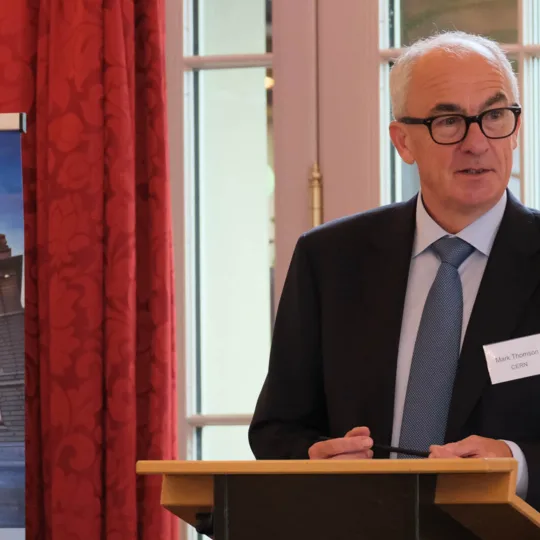
‘CHEF is a forward-looking initiative that ensures world-class research in particle physics at the seven participating universities. It sets the stage for Switzerland to play a decisive role in the development of the next generation of particle accelerators. As Rector of the University of Zurich, I am particularly proud that our university is leading this researcher-driven initiative. Twenty-four professors are already involved in CHEF and are currently training 39 early-career researchers.’
CHART and CHEF complement each other. The first initiative focuses on technological research and development, whereas the second focuses on physics. Together, they form a strategic package that allows Switzerland to already prepare for a possible major project at CERN.
The European Strategy for Particle Physics 2026 creates a framework for the development of this field of research. The decision on whether and when the FCC will be built will be reached by the CERN Council – consisting of the 25 member states – most likely in 2028. Thanks in part to CHART and CHEF, Switzerland is ready to take on responsibility and actively shape the future of particle physics.
Contact
Francesca Stocker, SERI
International Research Organisations
francesca.stocker@sbfi.admin.ch
+41 58 467 67 96
Author

Francesca Stocker
Related links
Read more

Mia Mader
Francesca Stocker, …