Research infrastructures
Research organisations
Research facilities
EU framework programmes for research and innovation
Horizon Europe
Research and innovation policy
Sustainable development
International cooperation
European cooperation
Switzerland is back playing a full role in European fusion energy research
Switzerland resumed its participation in the ITER fusion reactor, currently under construction in Cadarache (France), having regained full membership of Fusion for Energy with effect from 1 January 2026. This allows Switzerland both to further develop its capacities and better integrate the fusion ecosystem, and Europe to benefit from Swiss expertise and facilities.
09.09.2026
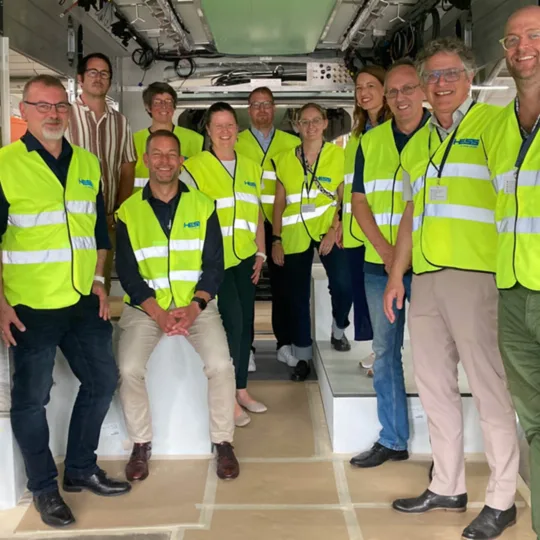
The ITER experimental thermonuclear reactor aims to demonstrate the potential of nuclear fusion for large-scale energy production. The project is a joint initiative involving the EU, China, South Korea, India, Japan, Russia and the United States. The EU's Fusion for Energy Joint Undertaking (F4E), based in Barcelona, is responsible for managing Europe's contribution to the project.
With the signature of a bilateral agreement between Switzerland and the EU on Swiss participation in EU programmes on 10 November 2025, Switzerland became associated to the Euratom Research and Training Programme as of 1 January 2025 and regained full membership of F4E with effect from 1 January 2026. Switzerland and the EU have thus returned to a long and fruitful tradition of scientific cooperation dating back to a 1979 agreement dedicated to fusion research. Switzerland has been associated to the full Euratom Programme since 2004 and a member of F4E since its establishment in 2007, with an interruption from 2021 to 2025.
In addition to the mutual benefits of scientific and technological cooperation, membership of F4E enables Swiss nationals to work for the organisation, and Swiss companies to take part in its calls for tenders. Further, Switzerland is now actively involved in the decision-making that shapes the European fusion ecosystem through its seat on F4E’s Governing Board, the organisation’s supreme decision-making body.
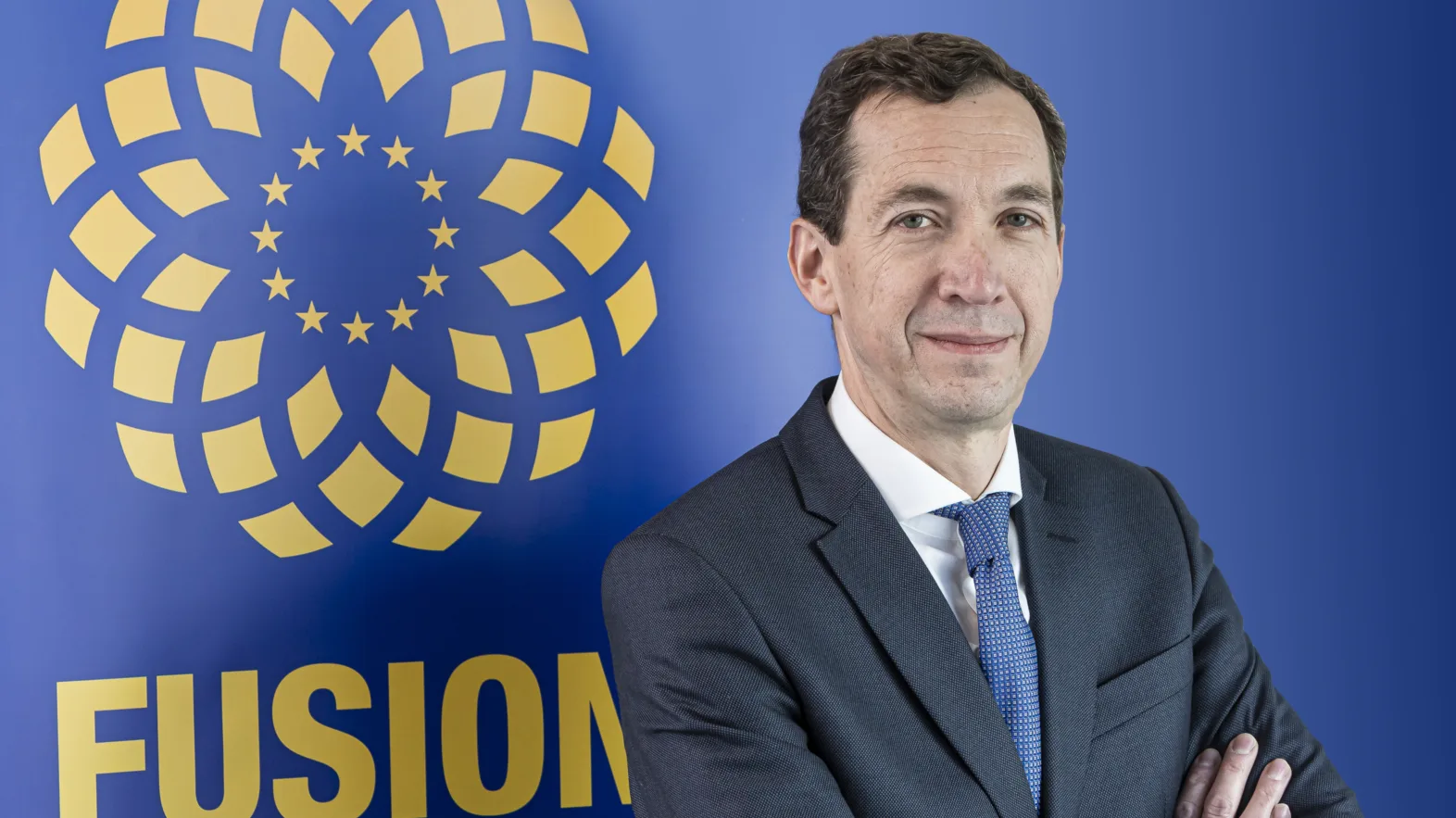
Interview with Marc Lachaise, Director of Fusion for Energy
What is your personal view of how nuclear fusion can contribute to the common good?
I’m optimistic about fusion energy because it comes with considerable geopolitical, environmental and industrial merits. We need to lower our dependence on third countries and reduce the use of fossil fuels to fight climate change.
Fusion is inherently safe. The fuel it requires is abundant and does not generate any greenhouse gases. Tomorrow’s energy mix needs to be broad, diverse, clean and able to generate baseload electricity. Fusion fulfils the above criteria and we need to make room for it.
It’s also important for Europe to embrace this new technology and to keep up with advances as the race with US and China is intensifying.
Apart from mastering the relevant technologies, what can Europe gain from its participation in ITER?
Europe is the host of ITER, and its contribution to the project amounts to approximately 50%. This allowed F4E to create a partnership with more than 3,000 companies and 75 laboratories in Europe. And we are delighted to welcome Switzerland back to this supply chain because of the win-win opportunities it presents. There is no other device than ITER to date that will test such a wide range of different technologies. We will allow the fusion ecosystem, including start-ups, to benefit from the learning curve we have gone through.
How does F4E view the private sector's entry into fusion research?
We see the proliferation of business-driven fusion initiatives as a clear sign of success. It is rewarding because this means that we have created a market, put together a reliable supply chain and generated reasonable expectations. The landscape today is fundamentally different compared to that of a decade ago and will change further.
F4E has shown adaptability by reaching out to private and public-private initiatives via Memoranda of Understanding, establishing a framework for collaboration, and exchange and dialogue on topics of mutual interest. We have already signed these types of agreements with Proxima, Novatron, Gauss, to name a few.
Is there an estimate of the socio-economic impact of this activity?
According to our recent socio-economic report, covering 2018–2024, F4E’s investment amounted to nearly EUR 5.6 billion (in 2024 prices). Such expenditure generated an estimated EUR 5.95 billion in Gross Value Added (GVA), compared with a no-spending scenario. These activities also sustained an average of 5,600 additional full-time jobs per year in the same period (a total of 39,000 job-years). Looking ahead, F4E’s contributions are expected to yield EUR 9.88 billion in GVA and 4,500 jobs per year from 2025 to 2039.
What role do Swiss research institutions and industry play in the European nuclear fusion research programme?
Switzerland is a valued and trusted member of the fusion community. It has a talented workforce, institutions like the Swiss Plasma Center, which has been a champion in R&D, and facilities such as Falcon, which have been at our disposal to test equipment. We also look forward to actively collaborating with the Swiss Industry Liaison Officer to promote more business opportunities stemming from Europe’s contribution to ITER.
We see Switzerland as a strategic partner who can play its part in our supply chain. We also need to think of the human capital in preparing tomorrow’s workforce. I encourage our Swiss partners to use this comeback as the opportunity to raise awareness on business prospects, jobs and skills that will shape the future.
What avenues would you recommend to a young Swiss person who would like to work on helping to develop nuclear fusion?
We need to offer training prospects, business opportunities and attractive professional careers with long-term continuity. Our supply chain is gradually doing this. Moreover, F4E’s training scheme is an entry point to help Swiss graduates gain insight into and receive first-hand experience of the production of ITER components, procurement, project management, nuclear safety and quality, to name but a few. I would also like to encourage them to check our job vacancies to work for F4E or with F4E as seconded national experts.
What makes F4E an attractive employer for Swiss nationals?
Working at F4E offers you the opportunity to be part of a remarkable international project, which has the potential to change the history of mankind by bringing fusion a step closer. F4E is attractive to highly specialised and qualified staff with an engineering, industrial, scientific or project management and administrative background.
At the same time, you will be joining the EU civil service, where you can develop a challenging and rewarding career in a multicultural environment. F4E strongly encourages applications from female candidates and applies a policy of equal opportunities. We also offer measures to reconcile professional and private life and will provide reasonable adjustments at the workplace for persons with disabilities.
Contact
Laurent Salzarulo, SERI
International Research Organisations
laurent.salzarulo@sbfi.admin.ch
+41 58 483 95 87
Author
Laurent Salzarulo
Related links
Read more
Mia Mader
Francesca Stocker, …